

Targeted Drugs for Allergic Diseases Market Set to Hit USD 30.22 Billion by 2034, Driven by Rising Allergic Disorders
The global targeted drugs for allergic diseases market size was valued at USD 13.96 billion in 2024 and is predicted to hit around USD 30.22 billion by 2034, rising at a 8.06% CAGR, a study published by Towards Healthcare a sister firm of Precedence Research.
Ottawa, Dec. 01, 2025 (GLOBE NEWSWIRE) -- The global targeted drugs for allergic diseases market size is calculated at USD 15.08 billion in 2025 and is expected to reach around USD 30.22 billion by 2034, growing at a CAGR of 8.06% for the forecasted period.
The market is rising because of the increasing global burden of allergic disorders, coupled with the rapid adoption of advanced biologics and precision therapies offering superior efficacy and fewer side effects.
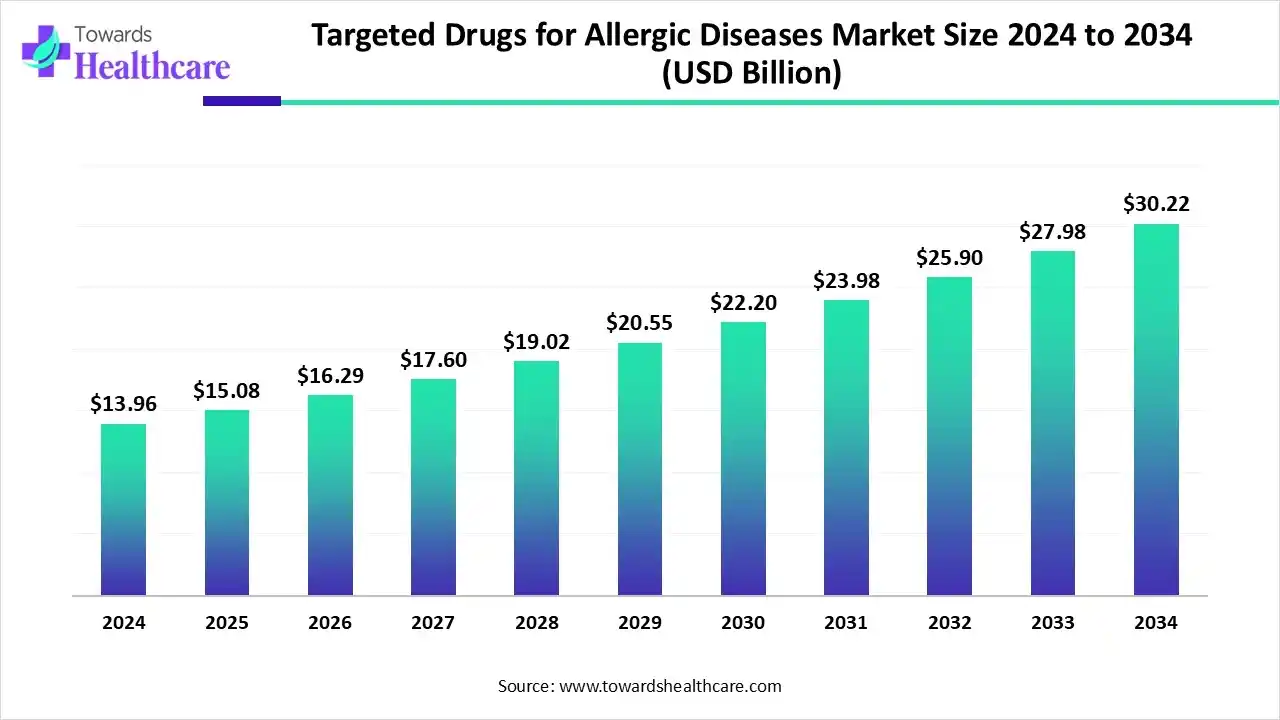
The Complete Study is Now Available for Immediate Access | Download the Sample Pages of this Report @ https://www.towardshealthcare.com/download-sample/6374
Key Takeaways:
- North America dominated the market in 2024, with a revenue of approximately 40%.
- Asia Pacific is expected to grow at the fastest CAGR during the forecast period.
- By drug class/type, the monoclonal antibodies segment dominated the market with a revenue of approximately 48% in 2024.
- By drug class/type, the anti-IgE and anti-IL biologics segment is expected to grow at the fastest CAGR during the forecast period.
- By indication, the asthma segment dominated the market with a revenue of approximately 40% in 2024.
- By indication, the atopic dermatitis segment is expected to grow at the fastest CAGR during the forecast period.
- By mechanism of action, the anti-IgE pathway inhibitors segment dominated the targeted drugs for allergic diseases market with a revenue of approximately 24% in 2024.
- By mechanism of action, the IL-4/IL-13 pathway blockers segment is expected to grow at the fastest CAGR during the forecast period.
- By route of administration, the subcutaneous injection segment dominated the market with a revenue of approximately 55% in 2024.
- By route of administration, the oral segment is expected to grow at the fastest CAGR during the forecast period.
- By end-user, the hospitals & specialty clinics segment dominated the targeted drugs for allergic diseases market with a revenue of approximately 45% in 2024.
- By end-user, the homecare/self-administration patients segment is expected to grow at the fastest CAGR during the forecast period.
Market Overview:
What Is Pushing the Rapid Growth of The Worldwide Targeted Drugs for Allergic Diseases Market?
The epidemic of allergic disorders is one of the fastest-growing chronic conditions in the world. The increase in allergic disorders can be attributed to various factors including greater exposure to pollution, lifestyle choices and genetic predisposition. As patients and healthcare providers have discovered that traditional treatments often fail to control these chronic diseases over a long period of time and with continued advances in science and technology creating more effective ways to utilize monoclonal antibodies and other precision-based biologics, they are turning to Precision-treatment strategies that provide improved control of the iGE/IL-4/-IL-5/-IL-13 inflammatory pathway, with increased control of the manifestation of allergic disease symptoms and decreased risk of flare-ups and re-issues.
- Additionally, increasing approvals of Biologics by both the FDA and EMA; growing reimbursement for Biologics; and large investments in Biologics R&D have all positively influenced the growth prospects for the Worldwide Targeted Allergy Drugs Segment.
Executive Summary Table
| Table | Scope | |
| Market Size in 2025 | USD 15.08 Billion | |
| Projected Market Size in 2034 | USD 30.22 Billion | |
| CAGR (2025 - 2034) | 8.06 | % |
| Leading Region | North America by 40% | |
| Market Segmentation | By Drug Class/Type, By Indication, By Mechanism of Action, By Route of Administration, By End User, By Region | |
| Top Key Players | Sanofi S.A., Regeneron Pharmaceuticals Inc., AstraZeneca plc, Novartis AG, GlaxoSmithKline plc, Amgen Inc., Eli Lilly and Company, AbbVie Inc., Roche/Genentech, Johnson & Johnson, Kyowa Kirin Co. Ltd., Chugai Pharmaceutical Co. Ltd., ALK-Abelló A/S, Amgen–AstraZeneca Alliance, Takeda Pharmaceutical Co. Ltd., Biogen Inc., Glenmark Pharmaceuticals, Hanmi Pharmaceutical Co. Ltd., Suzhou Connect Biopharma | |
You can place an order or ask any questions, please feel free to contact us at sales@towardshealthcare.com
Major Growth Drivers:
What are the key factors driving demand for targeted allergy drugs in the global marketplace?
- Growing incident rates of diseases of the respiratory system, atopic dermatitis, and allergic rhinitis worldwide, will fuel demand for innovative targeted allergy drugs that provide superior effective control of these diseases compared to traditional antihistamines and corticosteroids.
- Rapid advancements in drug development in the area of biologics by leading pharmaceutical companies in the areas of cytokine blockers and monoclonal antibodies specifically targeting the pathological mechanisms involved in causing chronic allergic disease are driving this new segment of drug development.
- Rising awareness of allergic diseases and increased numbers of diagnostics indicates there is a comprehensive need for a larger number of patients to receive targeted therapies as soon as possible after their diagnosis.
- The shift to personalized medicine. As the market for pharmaceuticals becomes increasingly personalized to the demographics and psychology of individual patients, more healthcare practitioners will be deploying the use of targeted allergy drugs.
Key Drifts:
Trends Impacting the Future of Targeted Drugs for Allergic Diseases Market:
There are many trends that will define the outlook of the targeted drugs for allergic diseases market. Key trends include such as, increased biologic use, movement towards self-administration of medicine, increased availability and affordability of biosimilars, increase in multi-pathway inhibitor development for combining treatments for inflammatory pathways, and increasing digital health infrastructure for digital health integration. Together, these two factors will allow the targeted allergy drug market to accelerate in growth and also present more opportunities for patients to receive their needed therapies.
Become a valued research partner with us - https://www.towardshealthcare.com/schedule-meeting
Significant Challenge:
One of the largest barriers to the use of targeted allergy drug treatment is the cost. The majority of targeted allergy treatments currently available worldwide are only accessible to wealthier people due to their significant costs and the fact that there are significant barriers to using these therapies in developing countries. Even in developed countries, reimbursement barriers and restrictions on insurance claims may limit access to the overwhelming majority of patients.
In addition to this, many patients do not have a good understanding of the long-term benefits of biologics or are unable to transition from standard allergy treatment to targeted allergy treatment. Addressing patient affordability, expanding insurance for targeted allergy treatment, and increasing provider education on the benefits of targeted allergy treatment will help to resolve these barriers.
Regional Analysis:
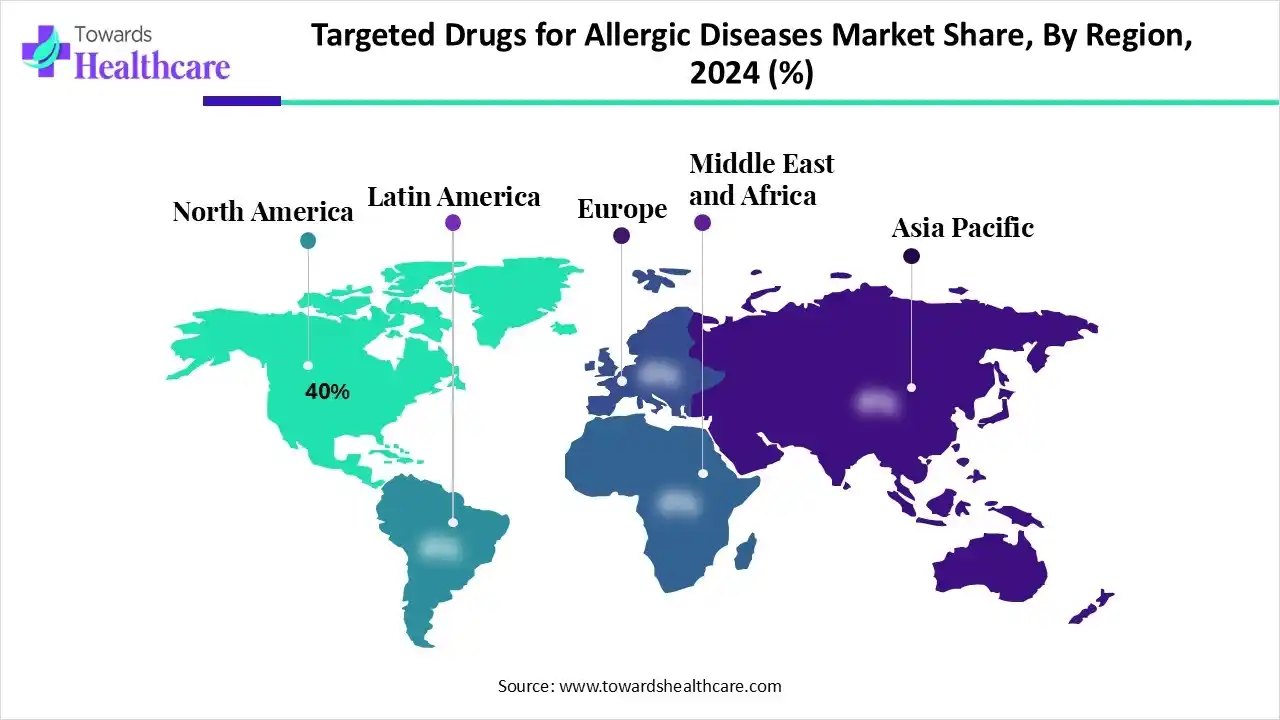
North America had the largest targeted drugs for allergic diseases market by 40% at the end of 2024. There are three major factors driving this growth; North America has a very strong and fully developed biotech industry, which has resulted in the development of a very sophisticated health care system, the rapid growth of the use of new types of targeted biologics and an ever-increasing number of FDA approved targeted allergy drugs will allow for quick entry into the market for new molecules such as mono- and cytokine inhibitors.
- Additionally, the growing number of asthma, eczema, and food allergies will continue to drive the development of new targeted therapies. There is already a well-established system of reimbursement support, which makes it easier for companies to manufacture targeted allergy drugs.
The Asia Pacific will see growth that far exceeds previously forecasted growth rates for the targeted drugs for allergic diseases market because of the rapid rise in asthma and food allergies in the Asia-Pacific population caused by increasing urbanization. Other factors leading to the rapid growth in targeted allergy treatment in Asia Pacific include the increase in disposable income and the increased focus of governments on managing chronic disease. Because of the increasing amount of disposable income and the emphasis that governmental bodies are placing on the prevention and treatment of chronic disease, the targeted allergy drug market is likely to grow extremely fast in all of the Asian countries.
Get the latest insights on life science industry segmentation with our Annual Membership: https://www.towardshealthcare.com/get-an-annual-membership
Segmental Insights:
By Drug Type:
In 2024, monoclonal antibodies segment led the targeted drugs for allergic diseases market. These products are being used increasingly as the primary treatment option for people who suffer from moderate-to-severe asthma, atopic dermatitis, and chronic urticaria because of the high efficacy (effectiveness) and precise mechanism of action. By neutralising certain cytokines (chemical messengers) and immunoglobulins (the body's natural antibodies), monoclonal antibodies can provide long-term relief of symptoms with the minimisation of acute flare-ups.
The anti-IgE/anti-IL biologics segment will be the fastest growing segment of the overall targeted drugs for allergic diseases market during the forecast period due to increasing acceptance of the use of precision therapies that target specific immune pathways. The current trend is towards the use of precision therapies to provide enhanced control to patients with severe or treatment-resistant allergic disorders and is therefore seen as desirable by clinicians. The expanding availability of drugs such as omalizumab ("Xolair"), dupilumab ("Dupixent") and the expected emergence of the new IL-5/IL-13 antagonist class of drugs, will further expand the clinical use of these drugs in patients with allergy-related diseases.
By indication:
The dominant market segment for allergy drugs in the market was asthma, this continued growth reflects an increase in asthma rates globally, particularly in urban areas with high levels of air pollution. Biologics that target pathways leading to symptoms of asthma have changed how patients manage their asthma; these drugs have provided the ability to treat the root causes of asthma by modifying the inflammatory response, improving lung function and reducing rates of hospitalizations. Targeted biologics have proven very effective in treating severe eosinophilic asthma and in patients with allergic asthma, and because of this they have become the therapy of choice within the clinical setting.
Atopic dermatitis was one of the markets expected to be the fastest growing due to a rise in moderate-to-severe atopic dermatitis and an increase in the awareness of patients and physicians regarding the need for specialized therapies. Traditionally, topical therapies do not adequately control systemic inflammation and as a result physicians are now recommending targeted biologics (IL-4/IL-13) as the future of treatment for these patients. These drugs provide significant improvements in eczema lesions, itching and the management of symptoms over the long term. In addition to an increase in the availability of recommended therapeutics and improved techniques for diagnosing and treating atopic dermatitis, the availability of novel biologic agents will spur further growth in this market.
By mechanism of action:
In 2024 the market was dominated by the anti-IgE pathway Inhibitors segment with approximately 24% of total market revenues; the majority of this revenue was generated from sales of the product, omalizumab. Anti-IgE drugs are effective because they neutralize IgE, thus eliminating the cascade of allergic responses that leads to symptoms of asthma, dermatitis, and urticaria. The clinical success of anti-IgE therapies, the long-term safety and effectiveness of therapies like omalizumab, and the versatility of anti-IgE therapies to treat multiple allergic conditions have contributed to the continued strength of this segment.
IL-4/IL-13 pathway blockers segment is projected to be the fastest growing segment due to the strong clinical results being achieved with targeted biologics for asthma and atopic dermatitis. IL-4/IL-13 Biologics target the central cytokines involved in allergic/IgE mediated inflammation. Patients are demonstrating increased demand for advanced biologic therapies, thus, in turn, increasing the need for companies to advance their portfolio to include next-generation IL-4/IL-13 inhibitors.
By Route of Administration:
By 2024, it is predicted that roughly 55% of the total market share would be provided by the subcutaneous injection route. Patient-administered biologic medications for the treatment of allergic diseases most often provide this route due to the ability for easy administration and increased bioavailability. The patient preference for self-administration and receiving medication at home has contributed significantly to the growth of this route. Also, due to advisable dosing-control and decreased patient visits to the hospital, the subcutaneous route is generally preferred by healthcare providers for delivering biologic medications.
The oral route of delivery has been predicted to be the fastest-growing segment of this market on account of pharmaceutical companies developing next-generation oral immunotherapies and small-molecule inhibitors. Oral formulations are easier for patients to take and are non-invasive compared to injections; therefore, they provide patients with an attractive alternative. Therapies directed toward specific immune pathways that are in the process of emerging for human-use clinical trials will produce tremendous potential for new products.
By End-User:
As of 2024, approximately 45% of the total sales of biologics were derived from the use of hospitals and specialty clinics. These facilities support the growing demand for the many sophisticated allergy treatments due to their capacity to provide diagnostic devices, expertise, and clinic-based monitoring for the effectiveness of biologics.
Due to increasing convenience and the demand for remote treatment alternatives, the homecare/self-administration end-user category will experience the largest growth in the coming years. Technology has allowed the development of auto-injectors, transportable biologics, and remote monitoring procedures; therefore, self-administered biologics are now a possibility. As the amount of information available for patients to determine whether they would be better off receiving allergy treatment via a self-administered route increase, the reliance of patients on clinics for support will decline; thus, increasing overall acceptance.
Browse More Insights of Towards Healthcare:
The global infectious diseases market size reached USD 21.74 billion in 2024, grew to USD 23 billion in 2025, and is projected to hit around USD 38.19 billion by 2034, expanding at a CAGR of 5.8% during the forecast period from 2025 to 2034.
The global drug discovery platforms market size is calculated at USD 186.24 million in 2024, grew to USD 211.26 million in 2025, and is projected to reach around USD 635.45 million by 2034, growing at a 13.44% CAGR from 2025 to 2034.
The global oncology drugs market size is estimated at US$ 204.39 billion in 2024, is projected to grow to US$ 217.18 billion in 2025, and is expected to reach around US$ 360.79 billion by 2034. The market is projected to expand at a CAGR of 6.29% between 2025 and 2034.
The anticancer drugs market size began at US$ 167.09 billion in 2024 and is forecast to rise to US$ 182.37 billion by 2025. By the end of 2034, it is expected to surpass US$ 401.32 billion, growing steadily at a CAGR of 9.14%.
The global CRISPR technology market size is calculated at USD 5.72 billion in 2024, grew to USD 6.67 billion in 2025, and is projected to reach around USD 26.22 billion by 2034. The market is expanding at a CAGR of 16.54% between 2025 and 2034.
The RNAi therapeutics market is forecast to grow at a CAGR of 14.9%, from USD 1.47 billion in 2025 to USD 5.11 billion by 2034, over the forecast period from 2025 to 2034.
The global myasthenia gravis treatment market size is estimated at US$ 1.55 billion in 2024 and is projected to grow to US$ 1.67 billion in 2025, reaching around US$ 3.29 billion by 2034. The market is projected to expand at a CAGR of 7.84% between 2025 and 2034.
The molecular diagnostics market size is forecasted to expand from USD 17.1 billion in 2025 to USD 27.21 billion by 2034, growing at a CAGR of 5.3% from 2025 to 2034.
The hepatitis A vaccine market was estimated at US$ 742.31 million in 2023 and is projected to grow to US$ 948.16 million by 2034, rising at a compound annual growth rate (CAGR) of 2.25% from 2024 to 2034.
The global pulmonary arterial hypertension drugs market size is calculated at USD 8.04 billion in 2024, grow to USD 8.4 billion in 2025, and is projected to reach around USD 12.38 billion by 2034. The market is expanding at a CAGR of 4.44% between 2025 and 2034.
Recent Developments:
- In March 2025, Dupixent (dupilumab) approved in Japan for COPD: The drug received regulatory authorization from Japan’s Ministry of Health, Labour and Welfare for use in adults with inadequately controlled chronic obstructive pulmonary disease (COPD) having an eosinophilic phenotype, representing the first biologic approval for COPD in Japan in over a decade.
Targeted Drugs For Allergic Diseases Market Key Players List:
- Sanofi S.A.
- Regeneron Pharmaceuticals Inc.
- AstraZeneca plc
- Novartis AG
- GlaxoSmithKline plc
- Amgen Inc.
- Eli Lilly and Company
- AbbVie Inc.
- Roche/Genentech
- Johnson & Johnson
- Kyowa Kirin Co. Ltd.
- Chugai Pharmaceutical Co. Ltd.
- ALK-Abelló A/S
- Amgen–AstraZeneca Alliance
- Takeda Pharmaceutical Co. Ltd.
- Biogen Inc.
- Glenmark Pharmaceuticals
- Hanmi Pharmaceutical Co. Ltd.
- Suzhou Connect Biopharma
Segments Covered in the Report
By Drug Class/Type
- Monoclonal Antibodies (mAbs)
- Small-Molecule Inhibitors (e.g., JAK, S1P, PDE4)
- Anti-IgE and Anti-IL Biologics (Omalizumab, Dupilumab, Mepolizumab, etc.)
- Allergen-Specific Immunotherapy (SCIT, SLIT)
- Others (Novel peptides, recombinant proteins)
By Indication
- Asthma (Moderate-to-Severe, Eosinophilic, Allergic)
- Atopic Dermatitis (Eczema)
- Allergic Rhinitis & Conjunctivitis
- Chronic Rhinosinusitis with Nasal Polyps (CRSwNP)
- Food Allergy & Anaphylaxis
- Urticaria & Other Allergic Conditions
By Mechanism of Action
- Anti-IgE Pathway Inhibitors
- IL-4/IL-13 Pathway Blockers
- IL-5/IL-5R Inhibitors
- JAK/TYK2 Inhibitors
- Others (IL-31, IL-33, S1P Modulators, CRTH2 Antagonists)
By Route of Administration
- Subcutaneous Injection (Prefilled Syringes/Autoinjectors)
- Intravenous Infusion
- Oral (JAK, PDE4 Inhibitors)
- Sublingual / Nasal / Inhaled Immunotherapy
By End User
- Hospitals & Specialty Clinics
- Allergy & Immunology Centers
- Homecare/Self-administration Patients
- Academic & Research Institutions
- Contract Research & Manufacturing Organizations (CROs/CMOs)
By Region
- North America
- U.S.
- Canada
- Asia Pacific
- China
- Japan
- India
- South Korea
- Thailand
- Europe
- Germany
- UK
- France
- Italy
- Spain
- Sweden
- Denmark
- Norway
- Latin America
- Brazil
- Mexico
- Argentina
- Middle East and Africa (MEA)
- South Africa
- UAE
- Saudi Arabia
- Kuwait
Immediate Delivery Available | Buy This Premium Research @ https://www.towardshealthcare.com/checkout/6374
Access our exclusive, data-rich dashboard dedicated to the healthcare market - built specifically for decision-makers, strategists, and industry leaders. The dashboard features comprehensive statistical data, segment-wise market breakdowns, regional performance shares, detailed company profiles, annual updates, and much more. From market sizing to competitive intelligence, this powerful tool is one-stop solution to your gateway.
Access the Dashboard: https://www.towardshealthcare.com/access-dashboard
About Us
Towards Healthcare is a leading global provider of technological solutions, clinical research services, and advanced analytics, with a strong emphasis on life science research. Dedicated to advancing innovation in the life sciences sector, we build strategic partnerships that generate actionable insights and transformative breakthroughs. As a global strategy consulting firm, we empower life science leaders to gain a competitive edge, drive research excellence, and accelerate sustainable growth.
You can place an order or ask any questions, please feel free to contact us at sales@towardshealthcare.com
Europe Region: +44 778 256 0738
North America Region: +1 8044 4193 44
APAC Region: +91 9356 9282 04
Web: https://www.towardshealthcare.com
Our Trusted Data Partners
Precedence Research | Statifacts | Towards Packaging | Towards Automotive | Towards Food and Beverages | Towards Chemical and Materials | Towards Consumer Goods | Towards Dental | Towards EV Solutions | Nova One Advisor | Healthcare Webwire | Packaging Webwire | Automotive Webwire | Nutraceuticals Func Foods | Onco Quant | Sustainability Quant | Specialty Chemicals Analytics
Find us on social platforms: LinkedIn | Twitter | Instagram | Medium | Pinterest


Legal Disclaimer:
EIN Presswire provides this news content "as is" without warranty of any kind. We do not accept any responsibility or liability for the accuracy, content, images, videos, licenses, completeness, legality, or reliability of the information contained in this article. If you have any complaints or copyright issues related to this article, kindly contact the author above.
